Guide
Two canal homes on the same street, same price, same square footage. One is a good buy and one is going to cost you forty thousand dollars in the first three years. The difference is never in the listing photos.
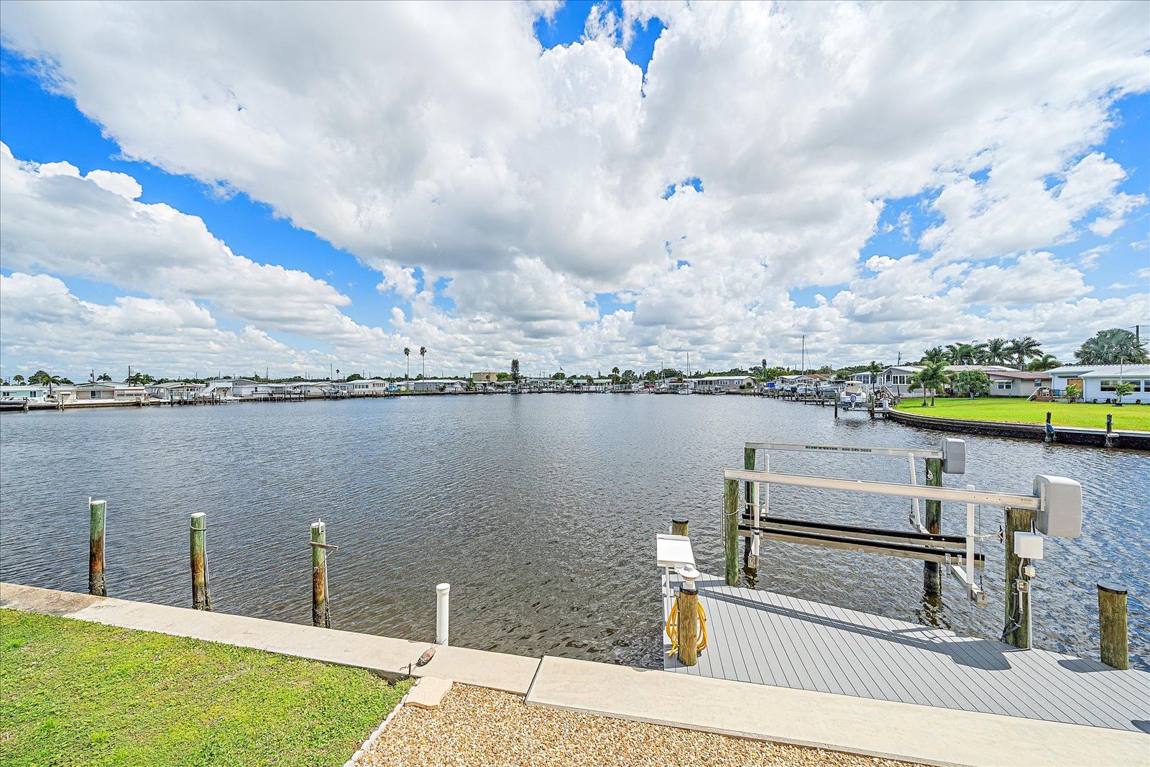
A seawall is what stops your back yard becoming part of the canal. When it fails it fails expensively, and it is almost never covered by insurance.
Look for cracking, bowing, rust stains bleeding through the cap, and soil sinking or washing out behind it. A dip in the lawn near the wall is a warning, not a landscaping problem.
Ask three questions: how old is it, who is responsible for it, and has anyone had it inspected? In some communities the wall is yours; in others it is shared or the association's. That answer changes what you are buying.
If there is any doubt, have it looked at during the inspection period by someone who does marine construction — not the general home inspector.
Docks and lifts are not permanent. Pilings rot, decking goes, motors and cables on a lift wear out, and all of it lives in salt water.
On a lift, the number that matters is its rated capacity, and whether that rating suits the boat you actually own or intend to buy. A 7,000 lb lift does not solve the problem if your boat weighs 10,000 lb wet and fuelled.
Ask when the lift was last serviced, whether the cables have been replaced, and whether it currently works. Ask to see it run. A lift that has not been operated in two years is a repair waiting to happen.
Ask for permits. Docks and lifts require them, and unpermitted structures become your problem the moment you close — sometimes at the point where you try to sell.
This is the question buyers forget and regret. A canal that floats your boat at high tide may not at low.
Ask what the depth is at mean low water at that dock, not in the middle of the canal. Then ask about the route out: how many turns, how far, and what you pass under.
Bridge clearance decides what boat you can own. A fixed bridge between the house and open water sets a hard ceiling on your air draft. It does not matter how deep the canal is if the mast or the tower will not fit under the bridge.
Ask about no-wake and manatee zones on the route. They do not stop you boating, but they change how long it takes to get anywhere, and that matters more than people expect.
Everything in the insurance guide applies double on the water. Get the flood zone and the elevation certificate for that specific property early, and get a real quote before your inspection period closes.
Ask what happened to the property in recent storms. Not the neighborhood — the property. Sellers must disclose known material defects, and a history of water intrusion is material.
Look at where the air conditioning condenser and the electrical panel sit. Equipment mounted at grade in a flood zone is a future claim.
A sound, recently rebuilt or well-maintained seawall with paperwork.
A permitted dock and a working lift rated for your boat.
Enough depth at low tide, and a clear run to open water without a fixed bridge you cannot clear.
An elevation that gives you a sensible insurance number.
A price that reflects the condition of all of the above — because if the seawall is at the end of its life, that is a real cost and it belongs in the negotiation, not in a surprise three years from now.
This is the part of a waterfront purchase I care most about, because it is where the money actually is. Walk a property with me before you write an offer and I will tell you which of these are fine and which are going to cost you.
Talk to CarmenThis guide is general information for Gulf Coast buyers and sellers, not legal, tax, insurance, or lending advice. Programs, rates, premiums and requirements change — confirm the specifics with your lender, insurance agent, title company, or attorney before you rely on them. Carmen Garcia Urgelles is a licensed Florida Realtor® with Keller Williams On The Water.